
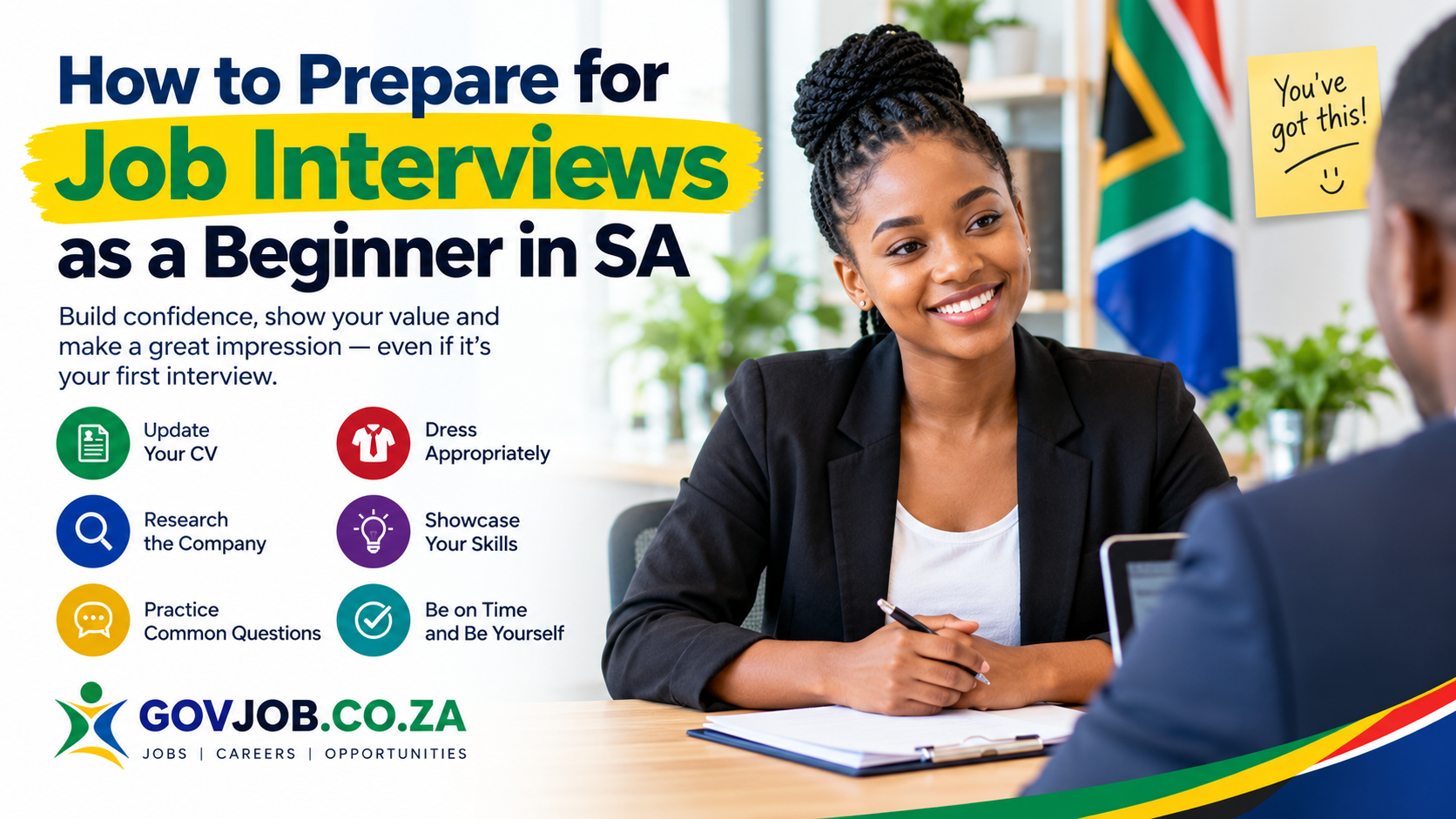
Getting invited to a job interview is an exciting moment, especially when you are applying for your first job. After sending out numerous applications and waiting for responses, receiving an interview invitation can feel like a big step towards building your future.
However, if you have never attended an interview before, you might not know what to expect. You may worry about what questions the employer will ask, what clothes to wear, how to introduce yourself or what to say when you do not have work experience.
The good news is that you do not need years of experience to prepare for an interview. With some research, practice and a positive attitude, you can walk into the interview feeling more confident and ready to explain why you could be a suitable candidate.
If you are a recent matriculant, unemployed graduate, first-time job seeker or someone looking for a new opportunity, here is how to prepare for a job interview in South Africa.
1. Research the Company Before the Interview
One of the first things you should do after receiving an interview invitation is learn more about the company.
Employers want to know that you understand where you are applying and have taken the time to prepare. You do not need to memorise the entire company website, but you should know the basics.
Start by finding out:
- What the company does and which services or products it offers.
- Where the company operates.
- What the position involves.
- Which skills or qualifications the employer requires.
- What the company says about its values, customers or workplace.
For example, if you have been invited to interview for an administrative clerk position at a government department, read the job advertisement again. Pay attention to the duties, minimum requirements and skills listed in the advert.
If the employer asks, “What do you know about our organisation?”, you will have something meaningful to say.
Research also helps you prepare questions of your own and decide whether the position matches your interests and qualifications.
2. Read the Job Advertisement Carefully
Never attend an interview without reviewing the job advertisement.
The advert gives you important clues about what the employer may want to discuss. Look at the responsibilities, minimum qualifications, required skills and any specific experience mentioned.
If the position requires computer literacy, prepare to discuss your computer skills. If it involves customer service, think about situations where you have helped someone, communicated clearly or solved a problem.
You should also review your CV before the interview. Employers may ask questions about the qualifications, skills and achievements you included in your application.
Make sure you can explain everything on your CV honestly. If you listed a computer course, for example, be ready to describe what you learned and how you can use those skills.
3. Practise Common Job Interview Questions
Practising interview questions is one of the best ways to prepare, particularly if this is your first interview.
You do not need to memorise long answers word for word. Instead, understand the point you want to communicate and practise explaining it naturally.
Here are some common questions you may encounter.
Tell us about yourself.
This question gives you an opportunity to introduce yourself professionally. Focus on your education, relevant skills, interests and what you hope to contribute.
For example:
“I recently completed my studies and I am looking for an opportunity to begin my career. I am a motivated person who enjoys learning new skills and working with others. I am interested in this position because it would allow me to apply what I have learned while gaining practical workplace experience.”
Adjust your answer to reflect your actual background and the job you are applying for.
Why should we hire you?
The employer wants to understand what you could bring to the organisation.
You can discuss your willingness to learn, communication skills, reliability, relevant training and ability to follow instructions. Support your answer with a genuine example whenever possible.
What are your strengths?
Choose strengths that relate to the position. These could include organisation, teamwork, attention to detail, problem-solving or communication.
Rather than simply listing strengths, explain how you demonstrate them in everyday situations.
What is your biggest weakness?
Be honest without being unnecessarily negative about yourself. Choose an area you are actively working to improve and explain the steps you are taking.
For example, you might explain that you are working on becoming more confident when speaking in front of groups by practising presentations and preparing in advance.
Why do you want this job?
Explain what interests you about the position and how it connects with your skills, studies or career goals. Avoid giving an answer that suggests you have no interest in the work itself.
4. Do Not Panic If You Have No Work Experience
Many first-time job seekers worry that employers will reject them because they have never worked before.
Although some positions require previous experience, entry-level opportunities may place greater emphasis on qualifications, transferable skills, attitude and willingness to learn.
If you have no formal employment history, think about the experience you have gained elsewhere.
You may have developed useful skills through:
- School projects and group assignments.
- Volunteering in your community.
- Helping with responsibilities in a family business.
- Student leadership or extracurricular activities.
- Computer courses or other training programmes.
- Personal projects that demonstrate your abilities.
For example, if you worked with classmates on a school project, you may have developed teamwork, communication and time-management skills.
You should never invent employment history or claim to have skills you do not possess. Instead, explain honestly what you can do, what you have learned and where you are willing to improve.
5. Choose Appropriate Interview Clothes
Your appearance does not determine your ability to do a job, but wearing clean, neat and appropriate clothing can help you feel prepared for a professional meeting.
You do not necessarily need to buy expensive clothes for an interview. Choose something suitable for the workplace and the type of position.
For many office interviews, neat trousers or a skirt with a clean shirt or blouse can be appropriate. For other industries, the expected clothing may differ.
Before leaving home, check that your clothes are clean and comfortable. Make sure you know where the interview will take place so you can plan your journey and arrive without rushing.
If the interview is online, choose a quiet space with good lighting and a reliable internet connection where possible.
6. Plan Your Journey and Arrive on Time
Being late can create unnecessary stress, especially when you are already nervous about your first interview.
If the interview is in person, confirm the address, date and time in advance. Check your transport options and estimate how long the journey will take.
If possible, plan to arrive around 10 to 15 minutes before your scheduled interview. This gives you time to find the correct office, report to reception and settle yourself.
Remember to bring any documents the employer has requested. These may include:
- A copy of your CV.
- Certified copies of qualifications, if requested.
- Your identification document, if required.
- Relevant certificates or proof of training.
- A notebook and pen.
Follow the employer’s instructions carefully. Do not assume that every employer requires the same documents.
7. Learn How to Communicate Confidently
You do not have to be the most talkative person in the room to perform well in an interview. What matters is communicating clearly, listening carefully and answering questions thoughtfully.
When the interviewer asks a question, take a moment to understand it before responding. If you do not understand something, it is acceptable to politely ask the interviewer to repeat or clarify the question.
Try to:
- Speak clearly and at a comfortable pace.
- Listen without interrupting.
- Give relevant examples.
- Maintain natural eye contact when appropriate.
- Be polite to everyone you meet.
- Avoid giving answers that are unnecessarily long.
If you feel nervous, remember that an interview is also an opportunity for the employer to learn about you. You are not expected to know everything, particularly when applying for a beginner-level position.
Practising with a trusted friend or family member can help you become more comfortable answering questions aloud.
8. Prepare Questions to Ask the Interviewer
Towards the end of an interview, the employer may ask whether you have any questions.
Instead of automatically saying no, prepare one or two relevant questions. This demonstrates that you are interested in understanding the role.
You could ask:
- What would the main responsibilities be during the first few months?
- What training is provided to new employees?
- What skills are most important for someone to succeed in this position?
- What are the next steps in the recruitment process?
Avoid asking questions that have already been clearly answered during the interview. You should also listen carefully if the interviewer has explained when candidates can expect feedback.
9. Be Honest About Your Skills and Qualifications
It can be tempting to exaggerate your abilities when you really want a job. However, honesty is important throughout the recruitment process.
If you do not know how to use a particular computer programme, do not claim to be an expert. Explain which related skills you have and whether you are willing to learn.
If you are asked about a situation you have never experienced, you can explain how you would approach it rather than pretending it has happened to you.
Employers need to understand your actual abilities so they can determine whether you are suitable for the position.
Being honest also helps you identify areas where additional training or practice could improve your future applications.
10. Follow Up After the Interview
After the interview, take a few minutes to reflect on how it went.
Think about the questions you answered confidently and those that were more difficult. This can help you prepare for future interviews, regardless of the outcome.
If you have the interviewer’s professional contact details and it is appropriate to do so, you may send a short thank-you message expressing appreciation for the opportunity.
If the employer provided a date for feedback, allow them the stated time before following up. If you have not heard back after a reasonable period, a polite enquiry may be appropriate.
Do not assume that an unsuccessful interview means you are not capable of finding work. Recruitment decisions can depend on many factors, including the specific requirements of the position and the strength of the applicant pool.
Every interview can provide useful experience for the next opportunity.
Final Thoughts
Preparing for your first job interview may feel intimidating, but you can make the experience easier by taking a few practical steps.
Research the company, review the job advertisement, practise common questions and prepare examples that demonstrate your skills. Plan your journey, bring the required documents and communicate honestly throughout the interview.
Most importantly, do not let a lack of formal work experience stop you from recognising the skills you already have. Your education, training, volunteering and personal responsibilities may have helped you develop abilities that are relevant to the workplace.
You may not answer every question perfectly, and that is part of learning. Focus on being prepared, respectful and willing to improve.
For more job opportunities, career advice and employment-related updates in South Africa, keep visiting Govjob.co.za and continue preparing for the opportunities you want.
Disclaimer: Interview processes and requirements differ between employers. Always follow the instructions provided in the official job advertisement or interview invitation, and never pay someone who promises to guarantee you a job.